 Telephone: 1 450-669-9256
 Email: sales@reefsolution.com



Filters
50 items
Sort Best selling
-
GSP ( Green Star Polyps )  Sale25%
GSP ( Green Star Polyps )
Regular price $25.00 Sale price $18.75GSP ( Green Star Polyps )
Sale price $18.75 Regular price $25.00 -
Papaya head (Clove Polyps) frag 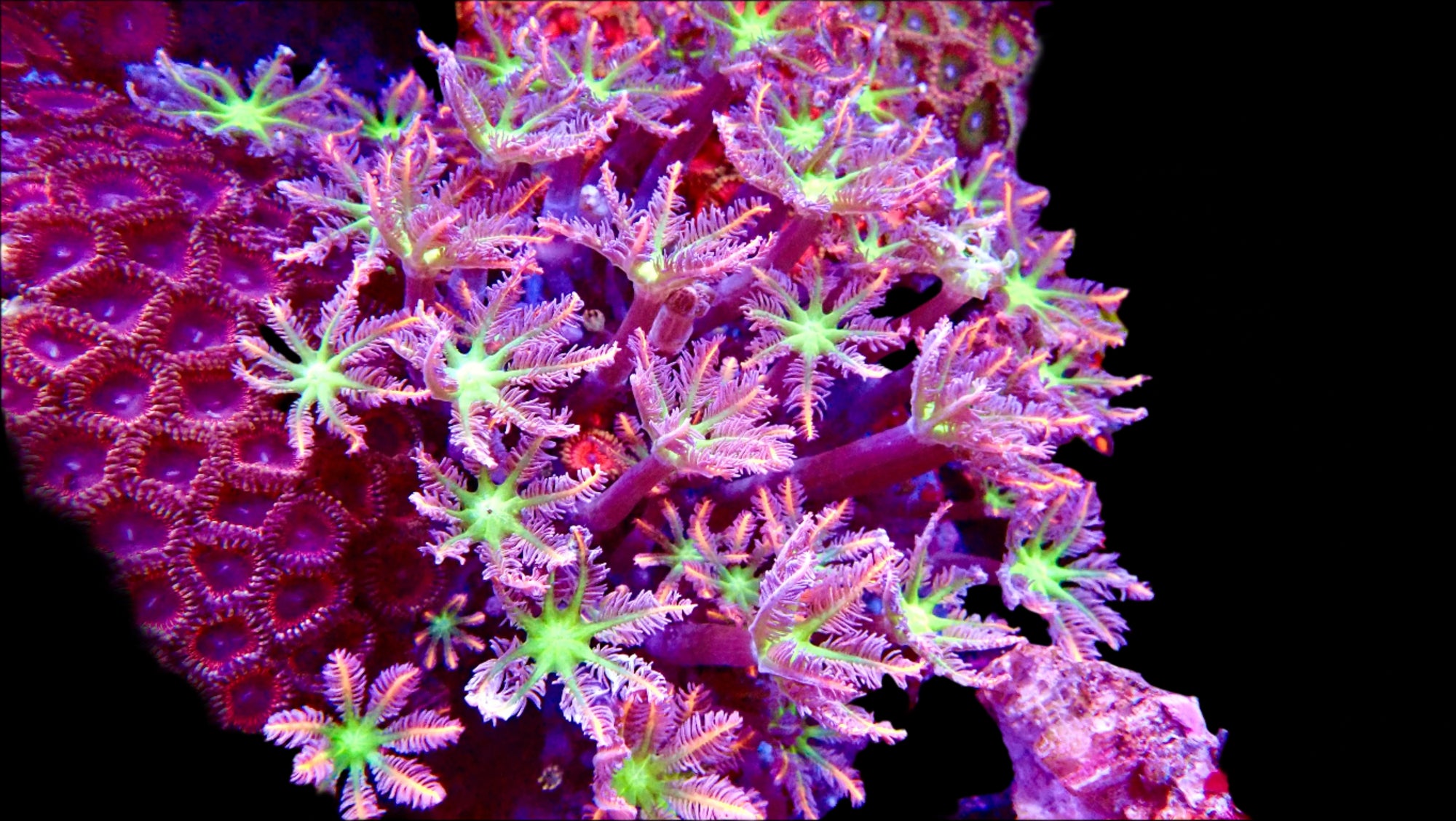 Sale25%
Papaya head (Clove Polyps) frag
Regular price $250.00 Sale price $187.50Papaya head (Clove Polyps) frag
Sale price $187.50 Regular price $250.00 -
Pulsing Xenia  Sale25%
Pulsing Xenia
Regular price $25.00 Sale price $18.75Pulsing Xenia
Sale price $18.75 Regular price $25.00 -
Oxide Zoanthids per head  Sale25%
Oxide Zoanthids per head
Regular price $55.00 Sale price $41.25Oxide Zoanthids per head
Sale price $41.25 Regular price $55.00 -
Magician Zoanthid per polyp 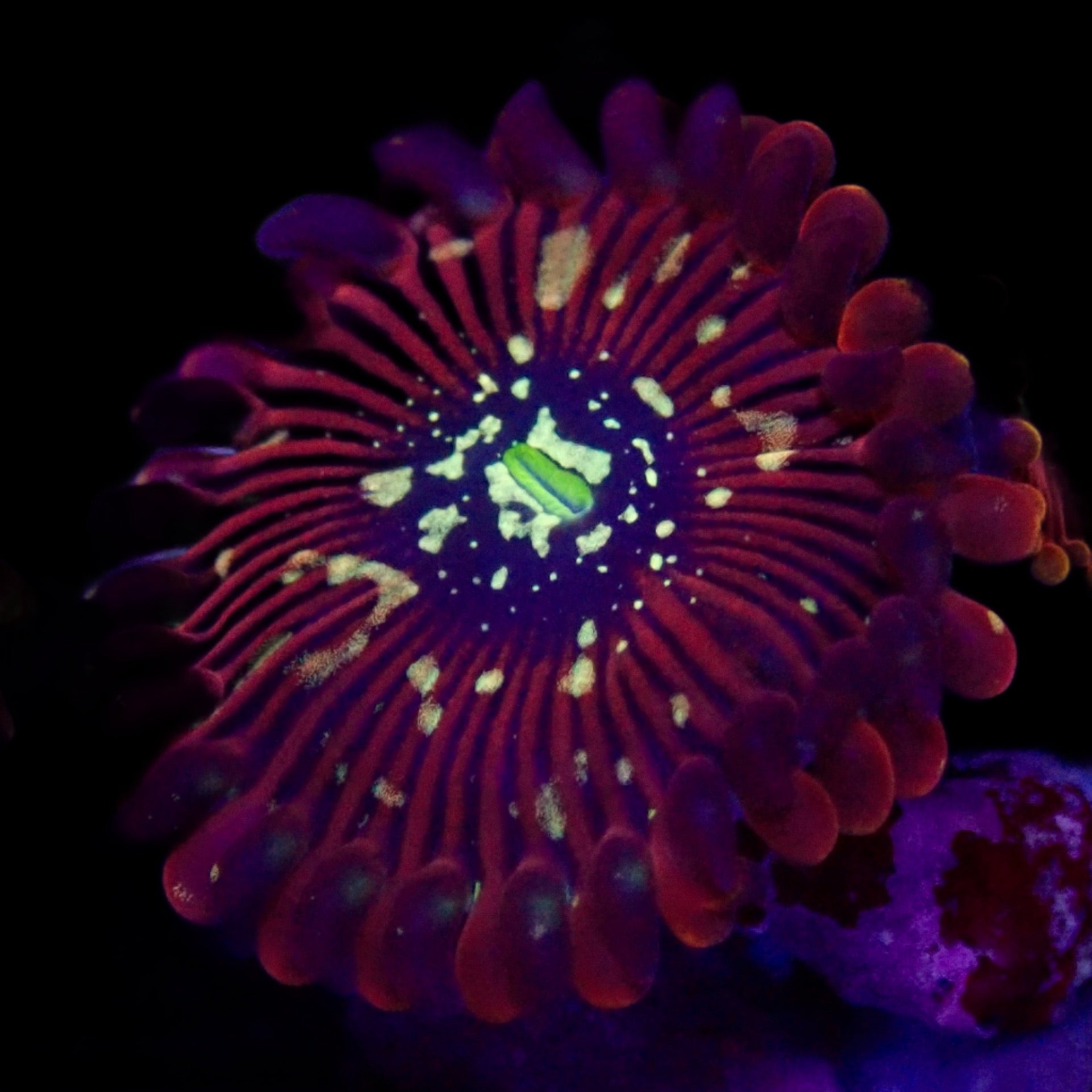 Sale25%
Magician Zoanthid per polyp
Regular price $45.00 Sale price $33.75Magician Zoanthid per polyp
Sale price $33.75 Regular price $45.00 -
Palythoa grandis per Polyp 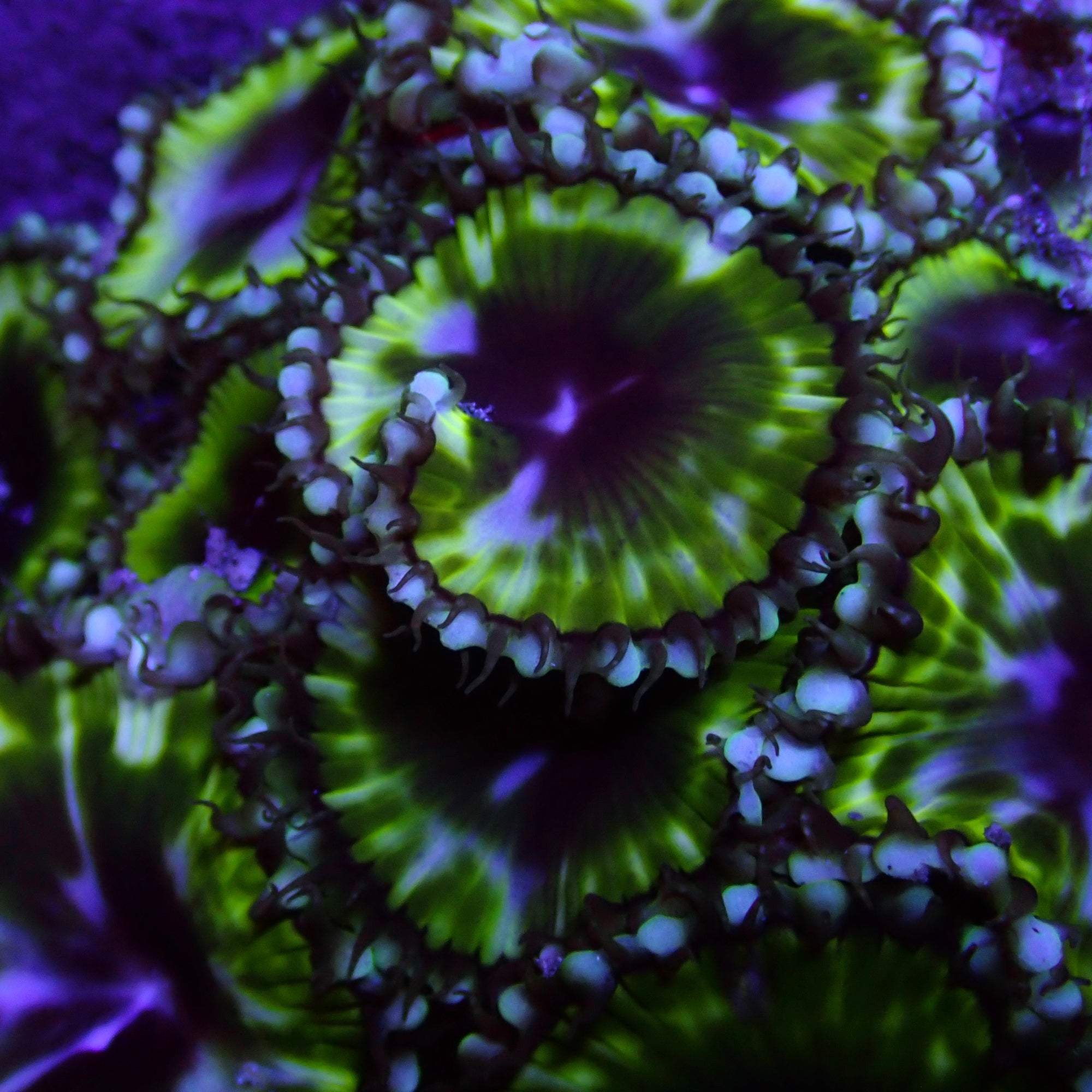 Sale25%
Palythoa grandis per Polyp
Regular price $65.00 Sale price $48.75Palythoa grandis per Polyp
Sale price $48.75 Regular price $65.00 -
Fire and Ice zoanthid frag 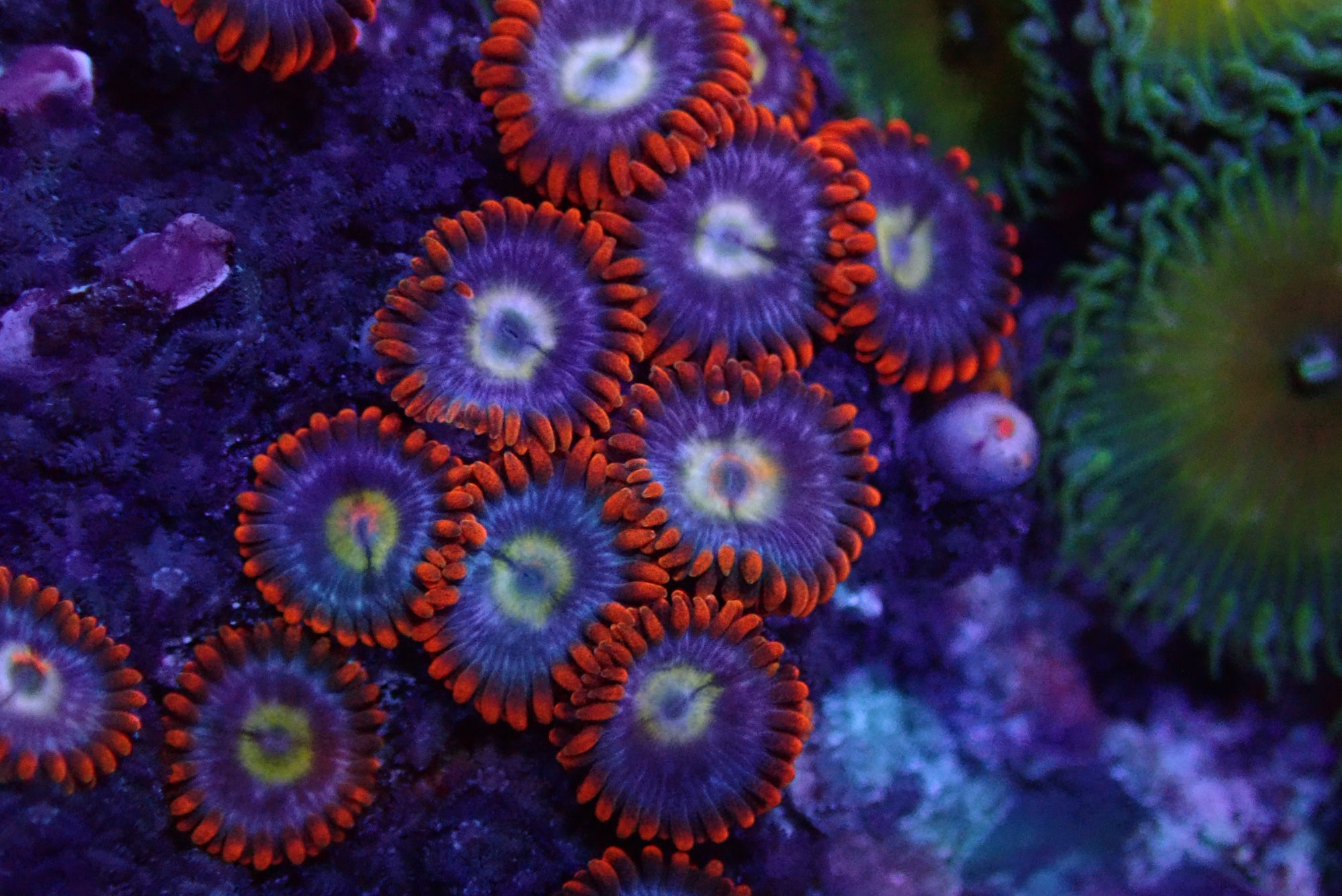 Sale25%
Fire and Ice zoanthid frag
Regular price $45.00 Sale price $33.75Fire and Ice zoanthid frag
Sale price $33.75 Regular price $45.00 -
Nuclear Palythoa 2 polyp frag  Sale25%
Nuclear Palythoa 2 polyp frag
Regular price $39.00 Sale price $29.25Nuclear Palythoa 2 polyp frag
Sale price $29.25 Regular price $39.00 -
Green Implosion Palythoa frag per head 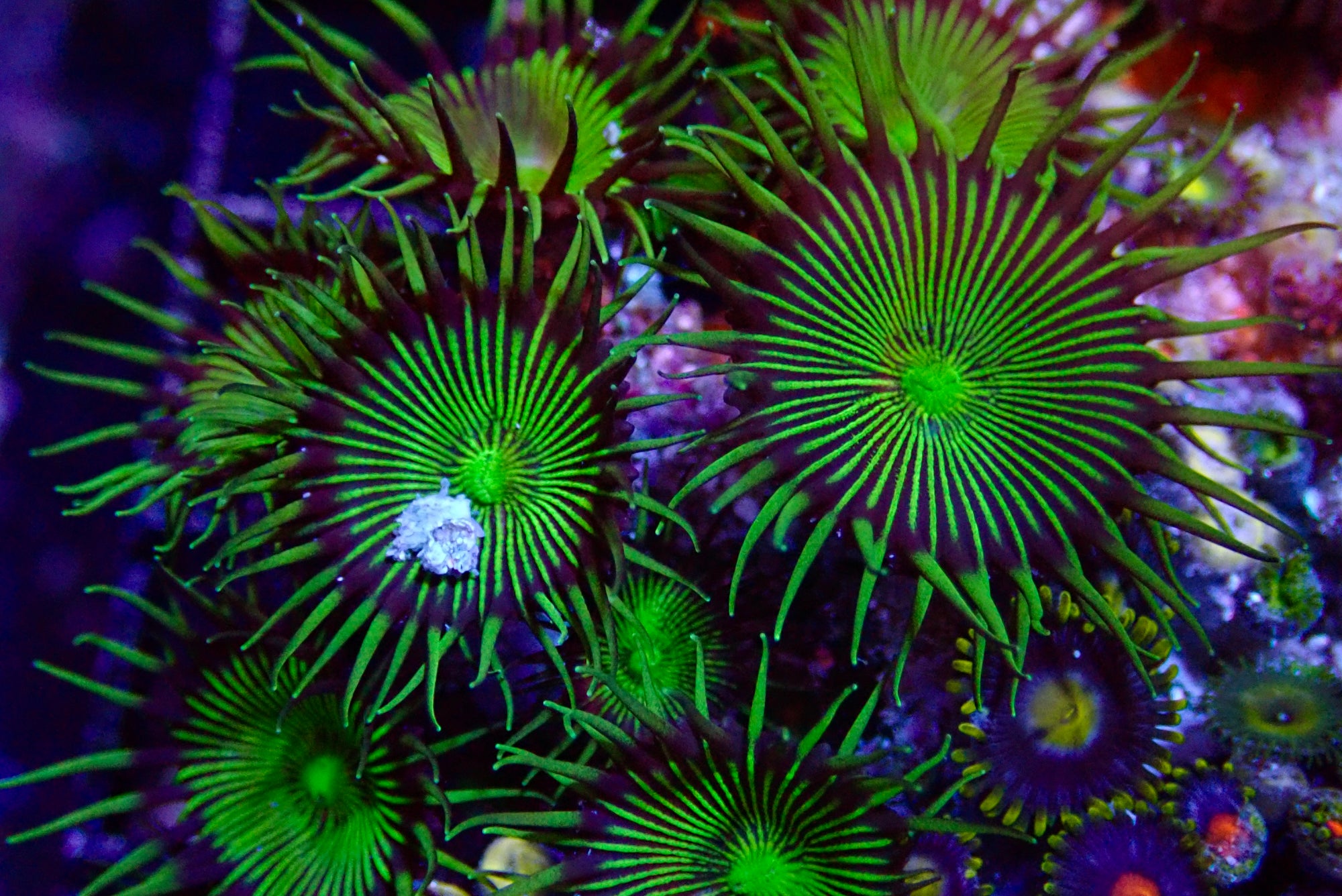 Sale25%
Green Implosion Palythoa frag per head
Regular price $35.00 Sale price $26.25Green Implosion Palythoa frag per head
Sale price $26.25 Regular price $35.00 -
Armor of God Zoanthid frag 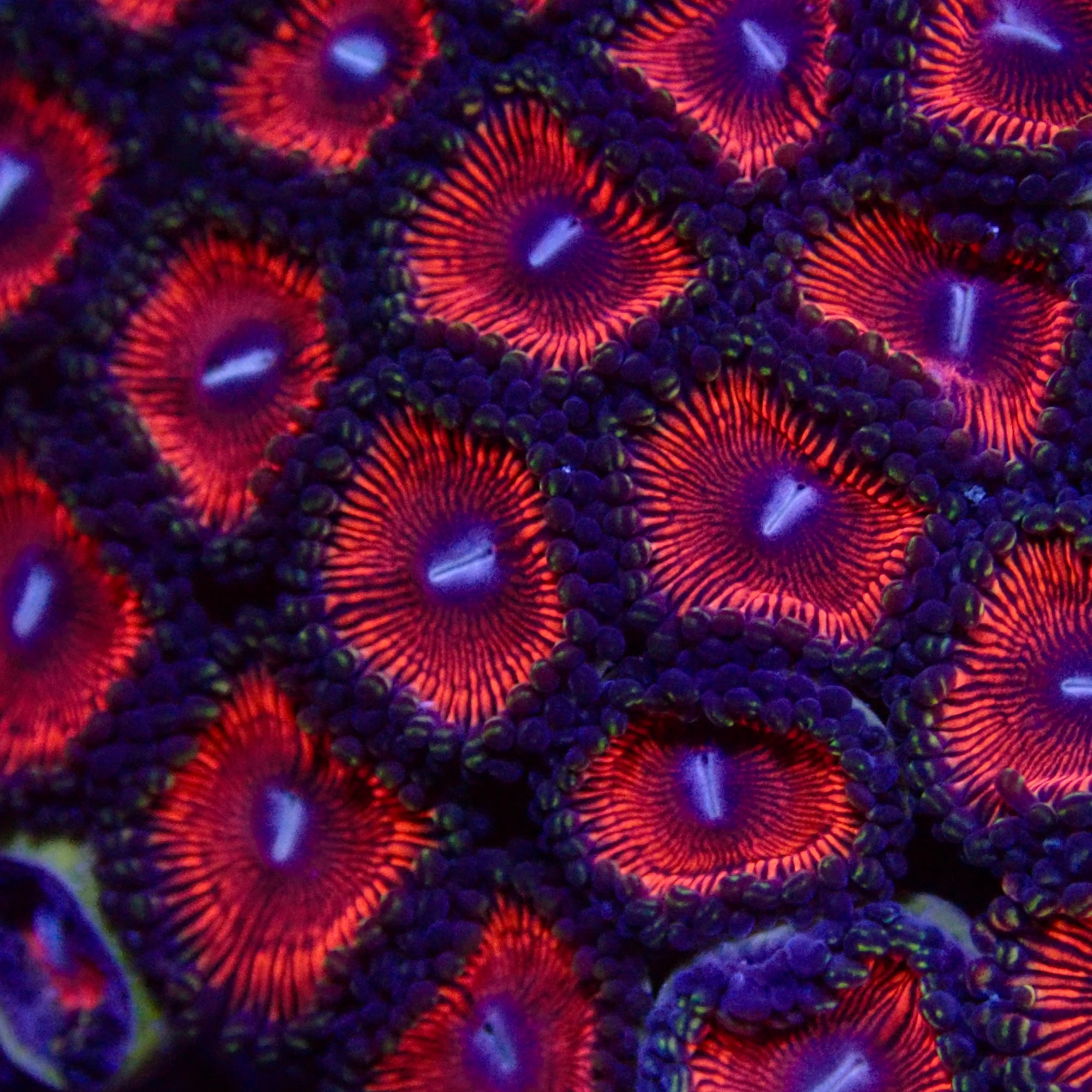 Sale25%
Armor of God Zoanthid frag
Regular price $65.00 Sale price $48.75Armor of God Zoanthid frag
Sale price $48.75 Regular price $65.00 -
Arafura Polyps frag 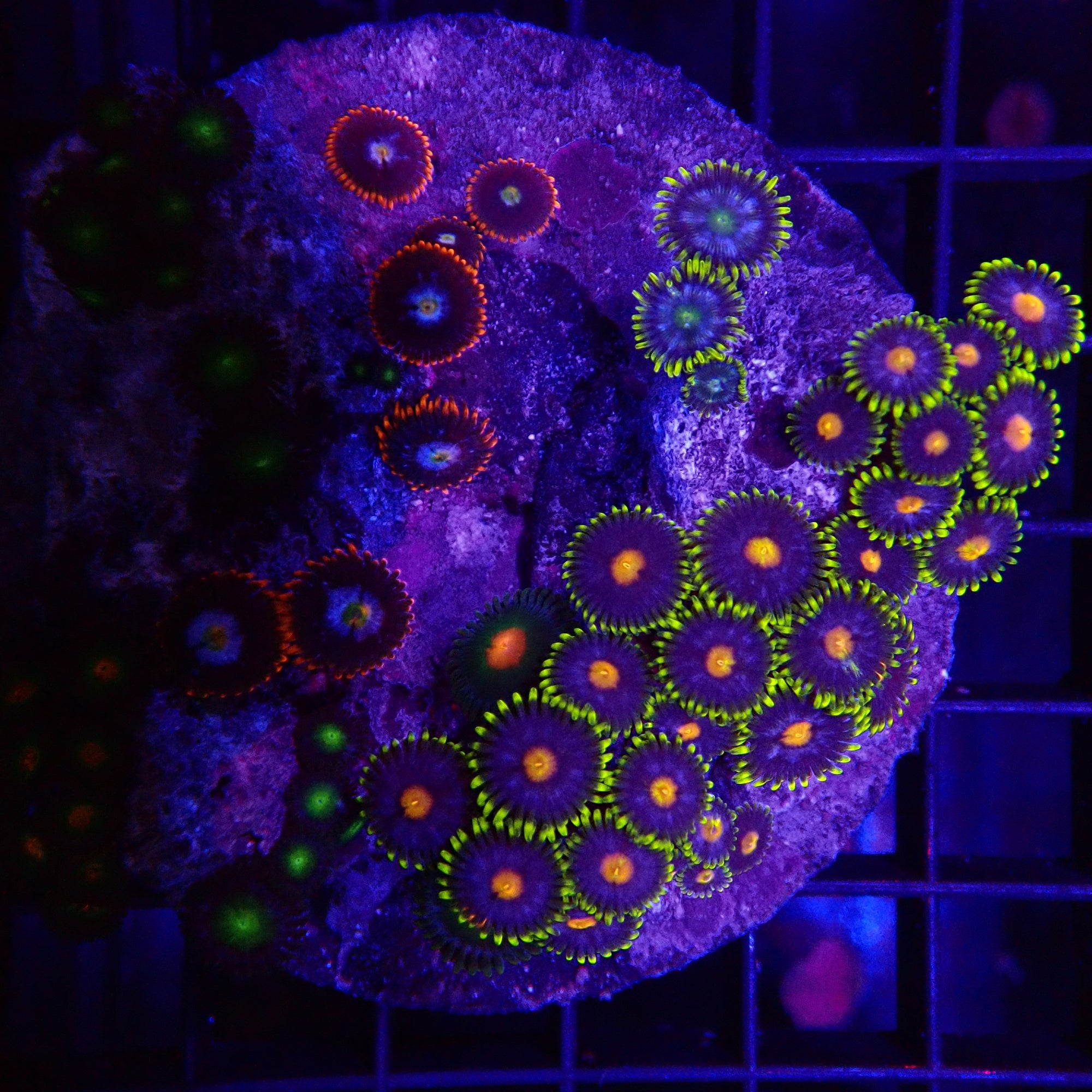 Sale25%
Arafura Polyps frag
Regular price $35.00 Sale price $26.25Arafura Polyps frag
Sale price $26.25 Regular price $35.00 -
Dreamweaver Zoanthids frag 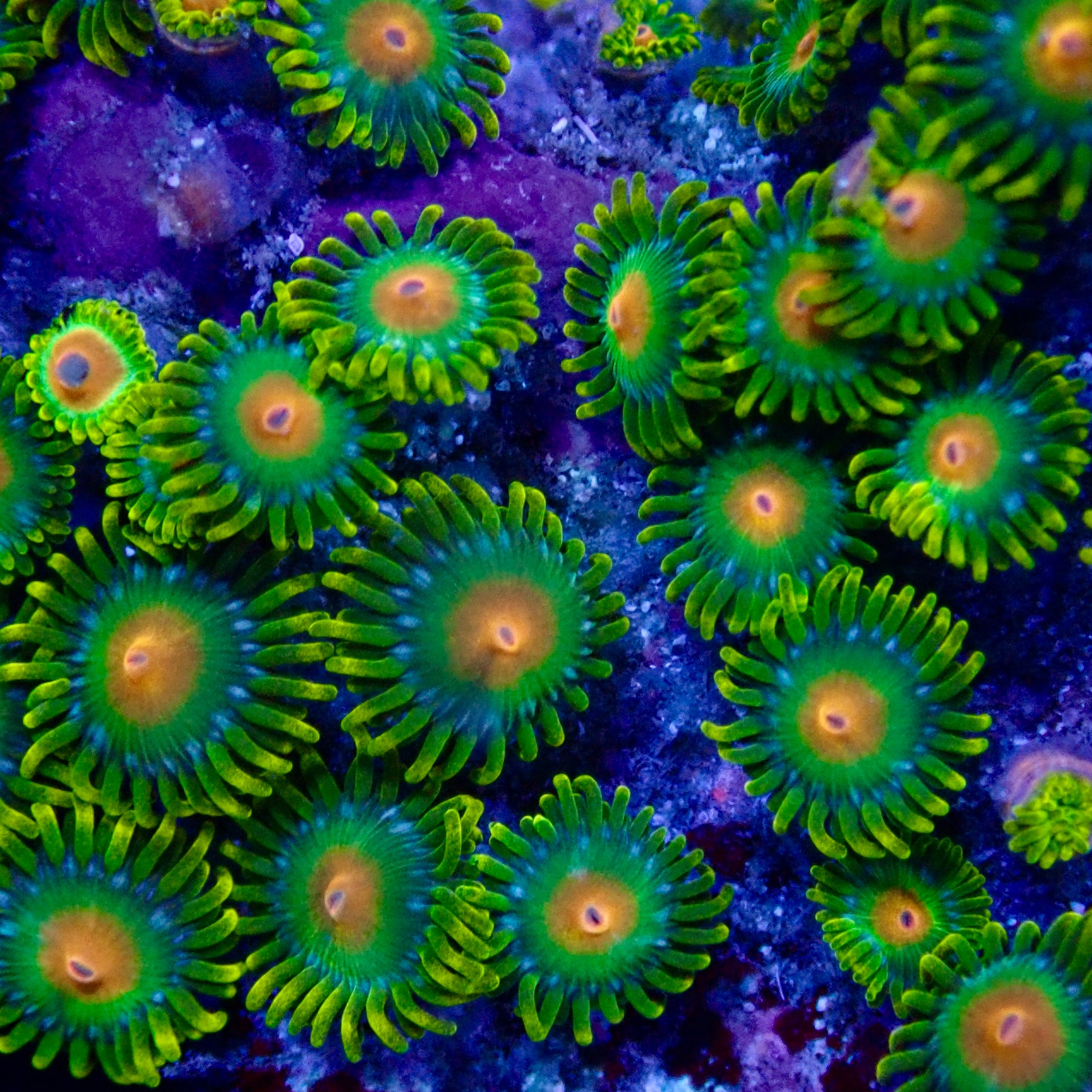 Sale25%
Dreamweaver Zoanthids frag
Regular price $45.00 Sale price $33.75Dreamweaver Zoanthids frag
Sale price $33.75 Regular price $45.00 -
Spiderman Zoanthid frag  Sale25%
Spiderman Zoanthid frag
Regular price $65.00 Sale price $48.75Spiderman Zoanthid frag
Sale price $48.75 Regular price $65.00 -
Galaxy Zoanthid Frag 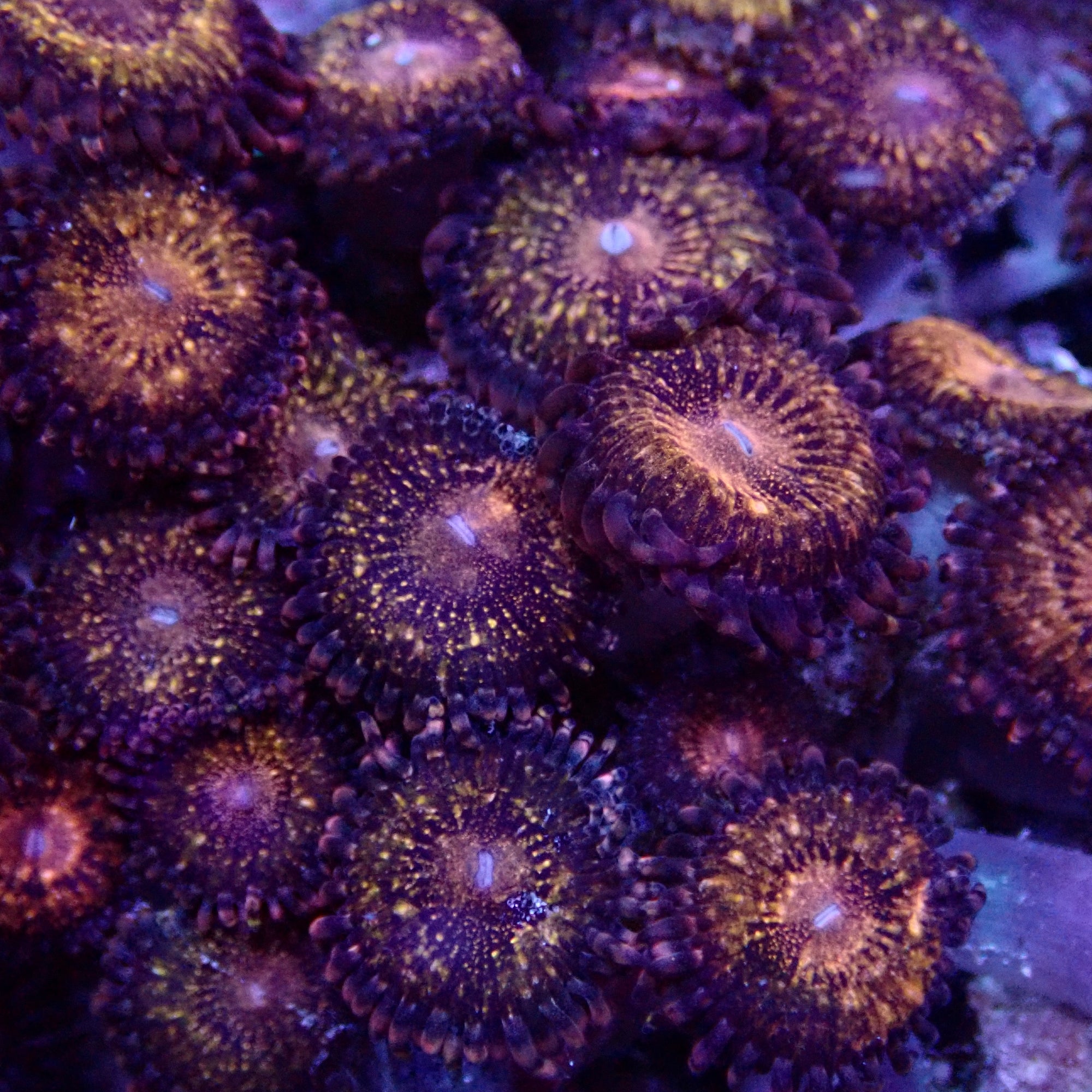 Sale25%
Galaxy Zoanthid Frag
Regular price $50.00 Sale price $37.50Galaxy Zoanthid Frag
Sale price $37.50 Regular price $50.00 -
Grouchy Green Zoanthids frag  Sale25%
Grouchy Green Zoanthids frag
Regular price $39.00 Sale price $29.25Grouchy Green Zoanthids frag
Sale price $29.25 Regular price $39.00 -
Arafura Polyps frag  Sale25%
Arafura Polyps frag
Regular price $35.00 Sale price $26.25Arafura Polyps frag
Sale price $26.25 Regular price $35.00 -
Arafura Button Polyps frag  Sale25%
Arafura Button Polyps frag
Regular price $35.00 Sale price $26.25Arafura Button Polyps frag
Sale price $26.25 Regular price $35.00 -
Purple Eyed Pinks Zoanthid frag  Sale25%
Purple Eyed Pinks Zoanthid frag
Regular price $49.00 Sale price $36.75Purple Eyed Pinks Zoanthid frag
Sale price $36.75 Regular price $49.00 -
Alien Egg Zoanthids frag  Sale25%
Alien Egg Zoanthids frag
Regular price $49.00 Sale price $36.75Alien Egg Zoanthids frag
Sale price $36.75 Regular price $49.00 -
Anaconda Zoanthids frag  Sale25%
Anaconda Zoanthids frag
Regular price $45.00 Sale price $33.75Anaconda Zoanthids frag
Sale price $33.75 Regular price $45.00 -
Blue Macaw Zoanthid frag  Sale25%
Blue Macaw Zoanthid frag
Regular price $39.00 Sale price $29.25Blue Macaw Zoanthid frag
Sale price $29.25 Regular price $39.00 -
Peach Pink Psychedelics Zoanthid frag  Sale25%
Peach Pink Psychedelics Zoanthid frag
Regular price $39.00 Sale price $29.25Peach Pink Psychedelics Zoanthid frag
Sale price $29.25 Regular price $39.00 -
Hawaiian Ding Dang Zoanthid per polyp  Sale25%
Hawaiian Ding Dang Zoanthid per polyp
Regular price $39.99 Sale price $29.99Hawaiian Ding Dang Zoanthid per polyp
Sale price $29.99 Regular price $39.99 -
Black Death Zoanthid frag  Sale25%
Black Death Zoanthid frag
Regular price $45.00 Sale price $33.75Black Death Zoanthid frag
Sale price $33.75 Regular price $45.00


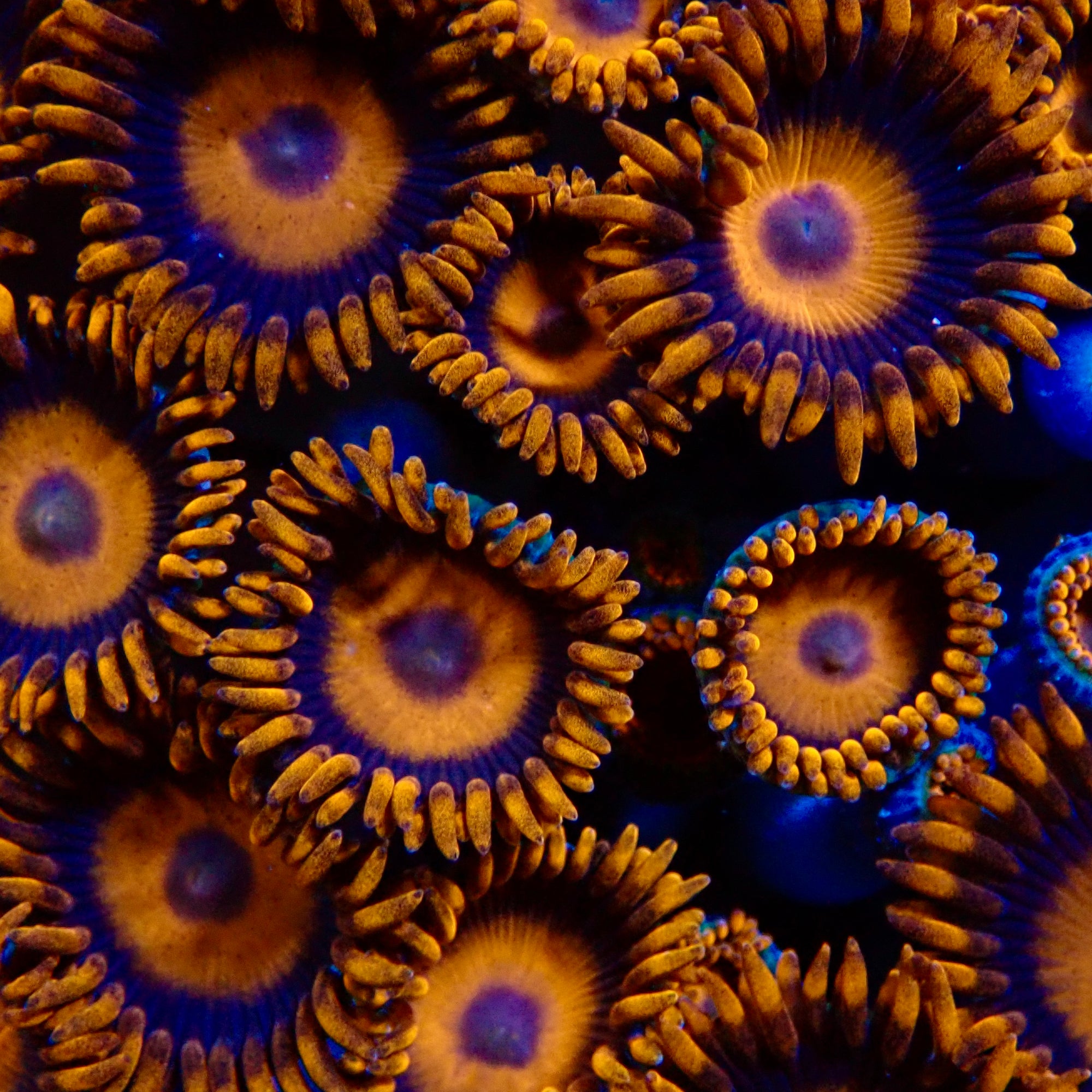

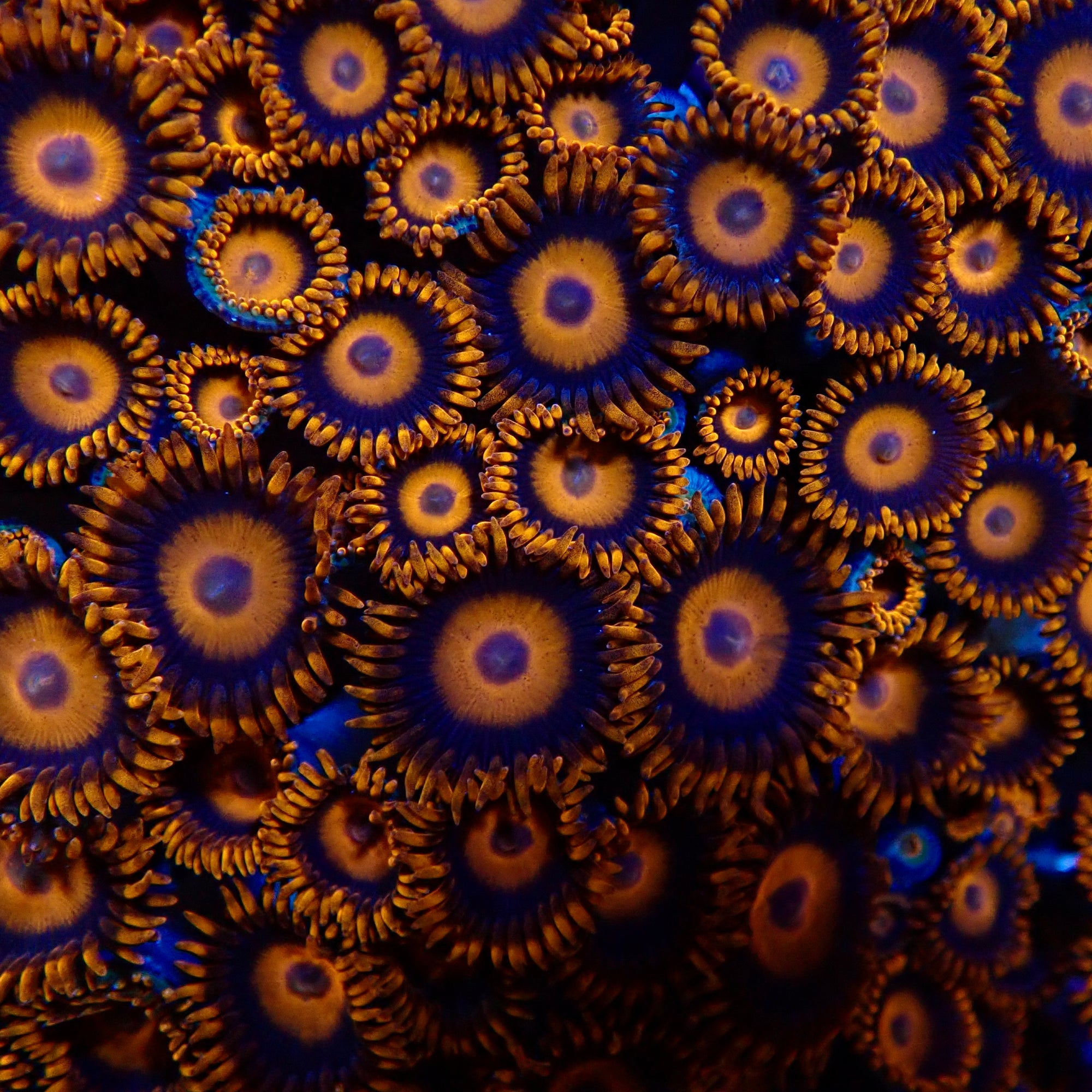
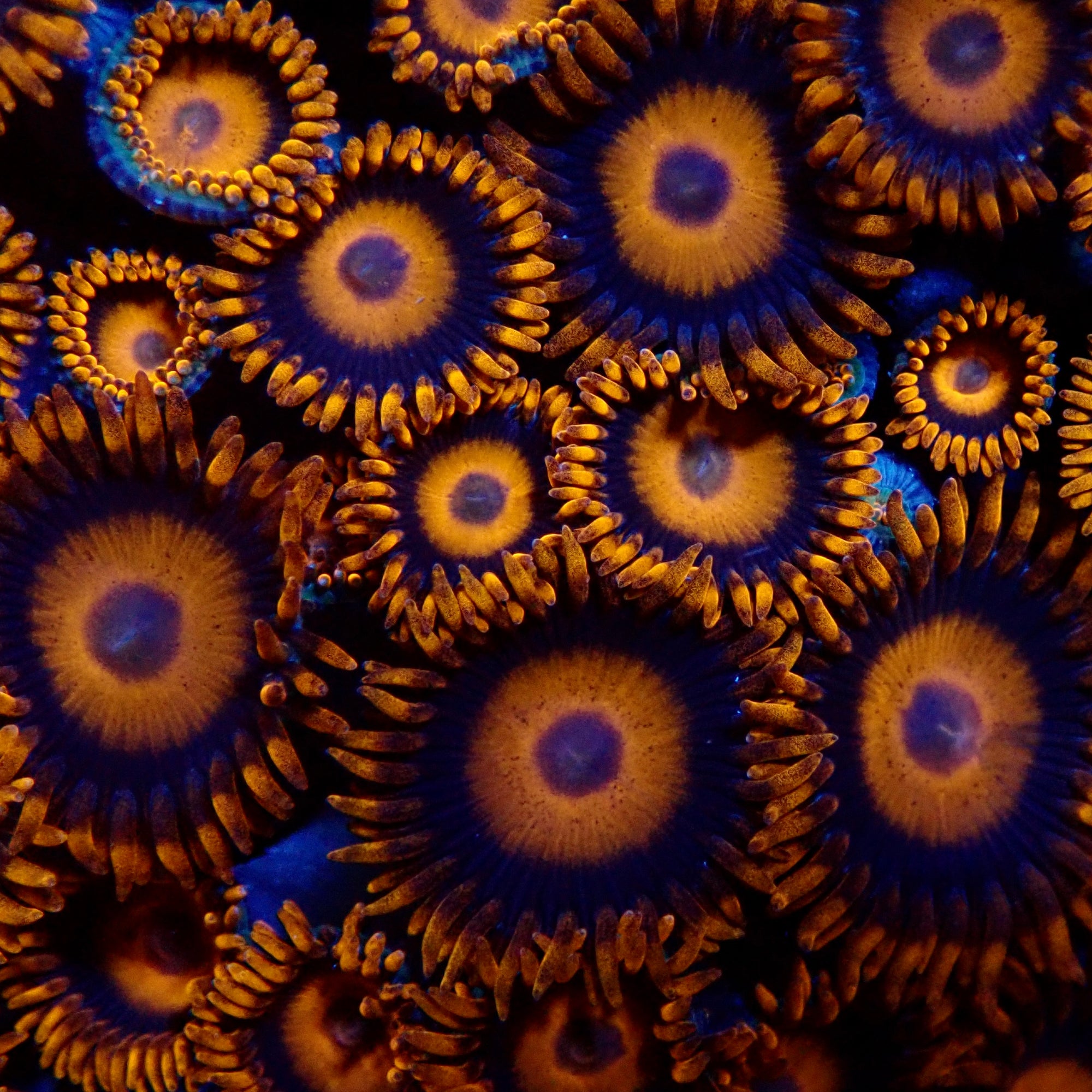
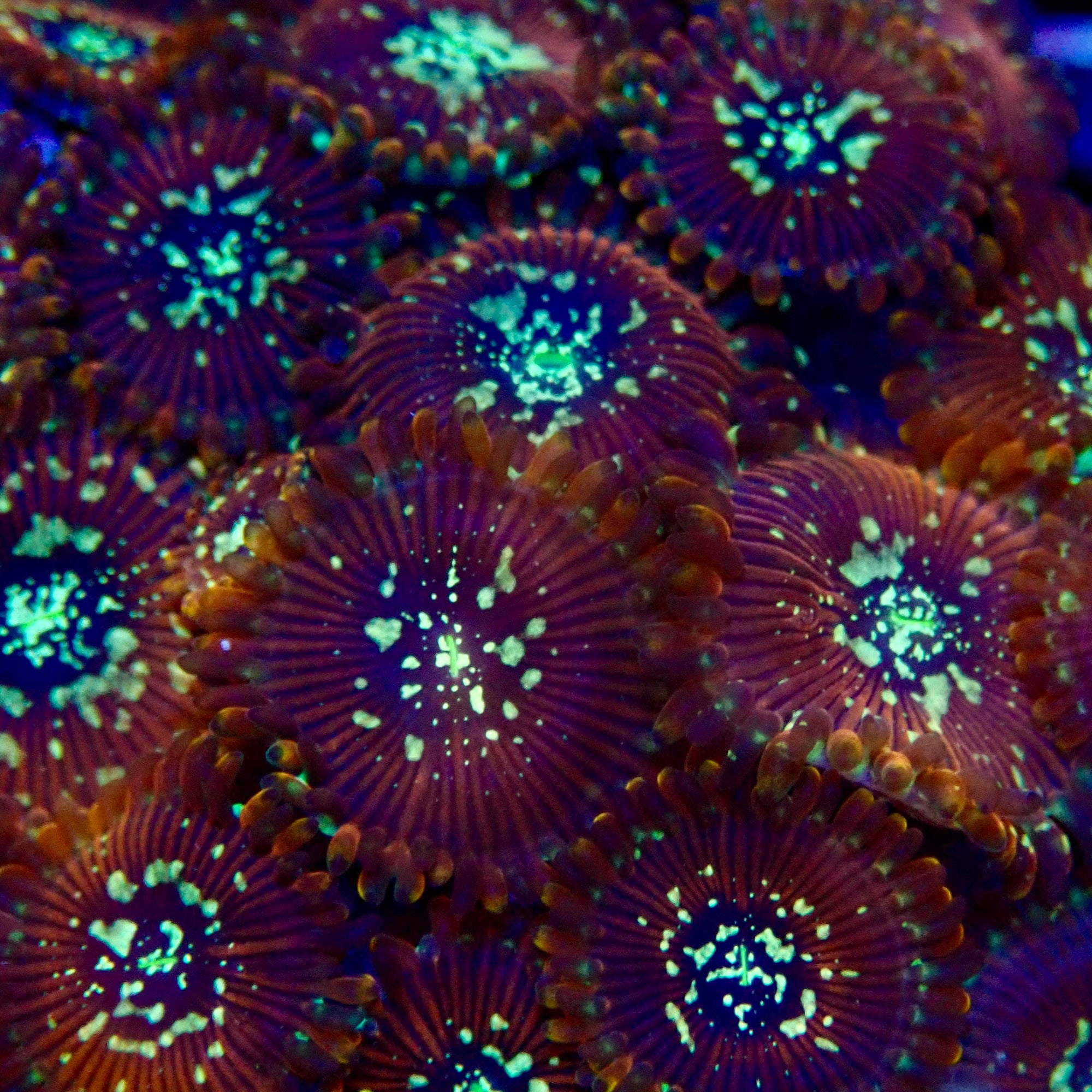
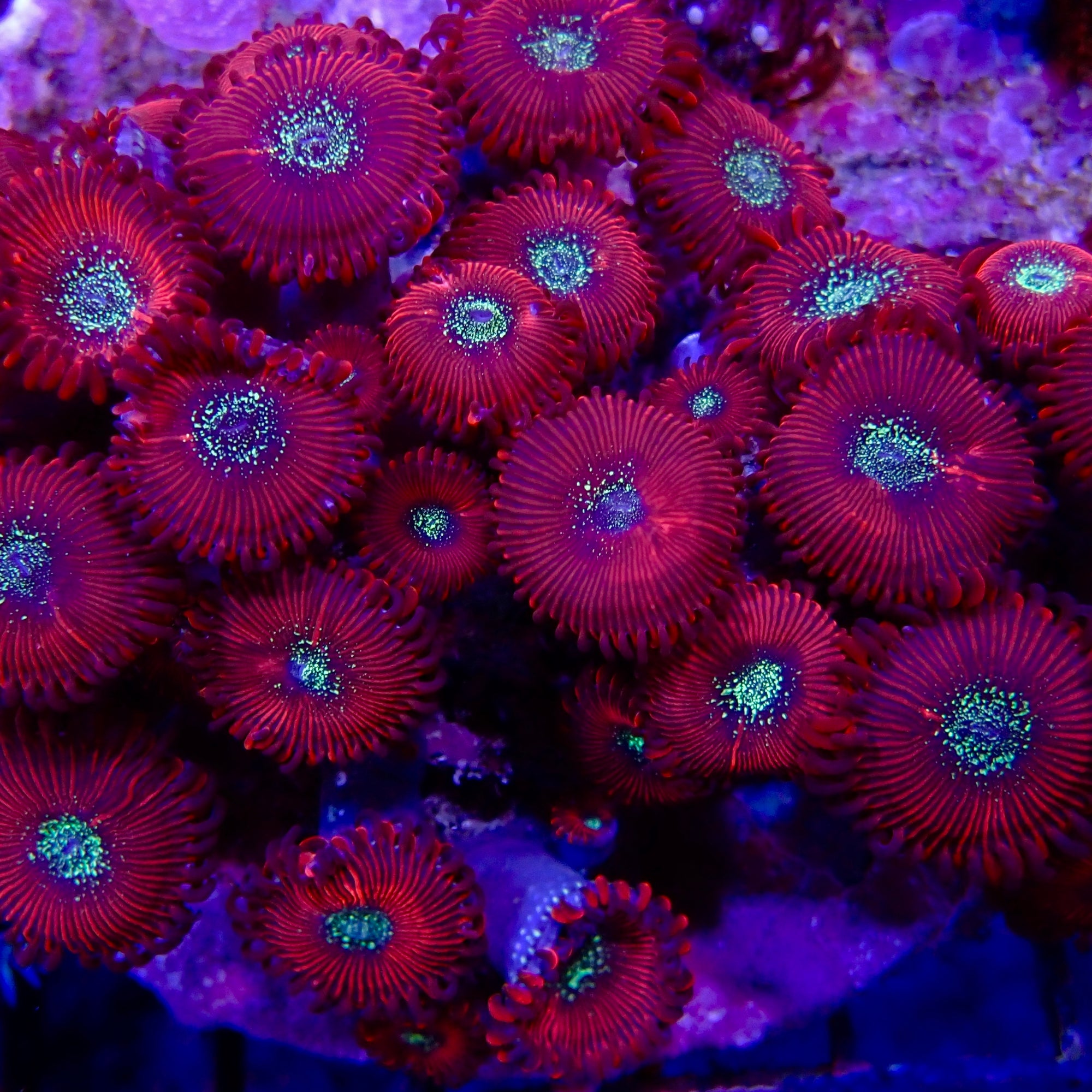
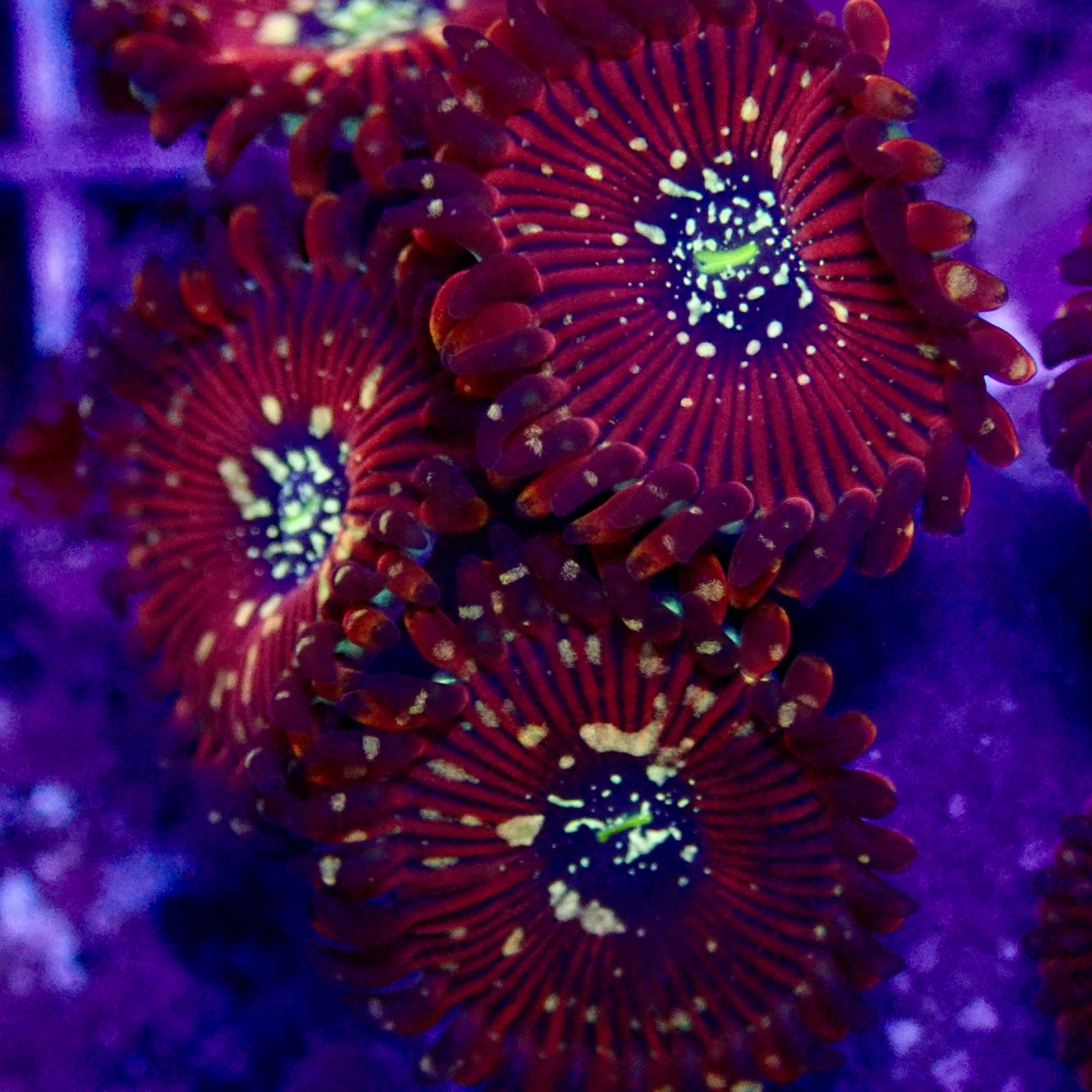
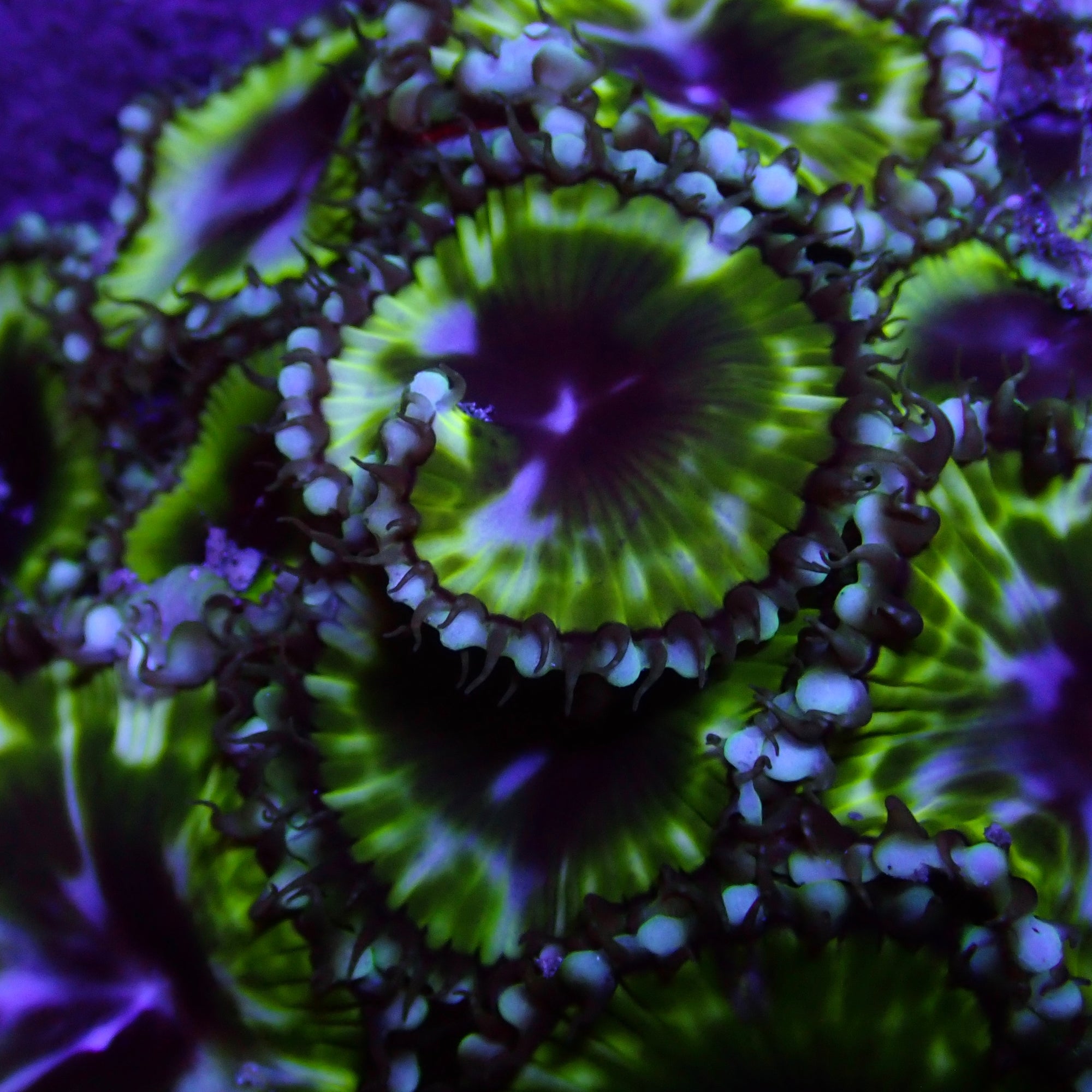

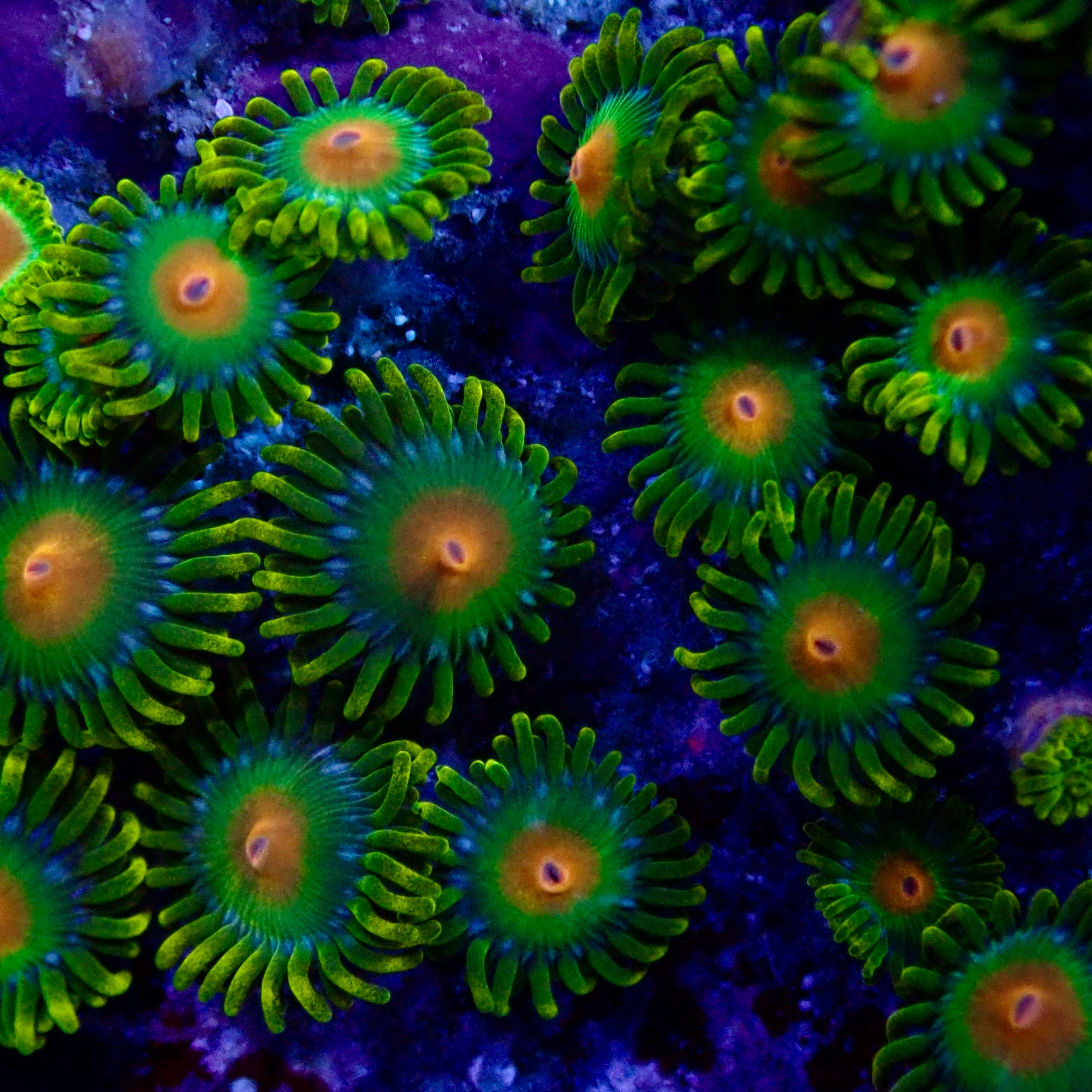


Zoanthids are soft corals: they have no skeleton. Zoanthids form colonies of small round polyps, joined together by a mat of tissue that spreads over the rock. Zoanthids in the trade are mostly Zoanthus and Palythoa; the former genus Protopalythoa is now placed under Palythoa. Hobbyists say "Zoas" for Zoanthus, "Palys" for Palythoa, and also "button polyps" or "sea mats". Zoanthids live on reefs around the world; those in the trade come mostly from the Indo-Pacific. Each piece in the collection is different: look at the photo on each product page.
Zoanthids at a glance
| Point | Guideline |
|---|---|
| Type of coral | Soft coral, colony of small polyps |
| Level | Beginner |
| Lighting | Generally 50 to 200 PAR; on arrival, start lower and increase little by little |
| Flow | Moderate and indirect, no direct jet |
| Placement | Bottom to middle of the tank, ideally on an isolated rock |
| Feeding | Mostly light, and small particles once or twice a week |
| Neighbours | Not very aggressive, but spreads and can grow over neighbouring corals |
| Growth | Fast, as a mat over the rock |
| Temperature | 78 to 80 °F (25.6 to 26.7 °C, our conversion) |
| Salinity | Stable |
| Alkalinity | Stable, close to natural seawater |
| Calcium | 400 to 450 ppm |
| Nutrients | Water that is not too clean |
| Phosphate | Low, stable |
| Safety | Always handle with gloves and eye protection |
An ideal coral to start with
The zoanthid is a truly ideal coral for beginners. The zoanthid really forgives mistakes: when the water quality is not good, it closes up, then it comes back out later.
Zoanthids are forgiving with light too: in general, from 50 to 200 PAR, they are fine. Zoanthids like water that is not too clean.
Zoanthus or Palythoa: the difference
Zoanthus have small polyps. Palythoa generally have larger polyps: in an adult Palythoa, the disc is at least 3/8 in, and some Palythoa, such as Palythoa grandis, can reach up to 2 in.
Palythoa incorporate sand and small debris into their flesh, which makes it firmer. Zoanthus do not. In Palythoa, the polyps are also partly sunk into the mat of tissue.
Palythoa and Zoanthus look very much alike. Zoanthids are often mislabelled in the trade: a "Paly" can be a Zoanthus, and the other way around.
How zoanthids spread
Zoanthids grow fast when conditions are good. A zoanthid makes new polyps by budding, at the base of existing polyps. The new polyps stay attached to the colony through the mat of tissue.
Over time, a few zoanthid polyps become a large mat that can cover a whole rock. Zoanthids spread over the rock, sideways, rather than upward.
Where to place zoanthids
Zoanthids go in the bottom or the middle of the aquarium, in a spot that stays clean. To keep control of their growth, place zoanthids on an isolated rock, like a small island, separate from the rest of the rockwork.
Leave space between zoanthids and other corals, about 2 to 3 in. Zoanthids can grow over and shade less hardy corals. Also keep zoanthids away from corals with long sweeper tentacles, which can sting them.
Some fish nip at zoanthids, such as butterflyfish and some angelfish.
Lighting and flow
Zoanthids are generally fine from 50 to 200 PAR. Too much light makes zoanthids turn pale or bleach; too little slows their growth. Zoanthids are sensitive to sudden changes in light: on arrival, place them in a darker spot, then raise the light little by little, over one to two weeks.
Flow for zoanthids should be moderate and indirect, strong enough that debris does not settle on the mat. A current that is too strong, or aimed straight at zoanthids, keeps their polyps closed.
Feeding zoanthids
Zoanthids get most of their energy from light. Zoanthids also benefit from small particles: phytoplankton, zooplankton or powdered coral food.
Feed zoanthids once or twice a week. With a pipette, place the food directly on the polyps.
Handling zoanthids safely
Watch out for Palythoa. Some Palythoa are very toxic when they are cut or handled; with Zoanthus, it is rarer. The worst are often the less colourful Palythoa, green or greyish: those can really send you to the hospital. Pouring boiling water on zoanthids, cutting them or things like that can be dangerous.
The toxin involved is called palytoxin, a very powerful marine toxin. Palythoa contain it more often than Zoanthus, but both genera can contain it. You cannot tell by eye or by colour which ones contain it, and live rock or other corals can carry zoanthids without anyone knowing: treat all zoanthids with the same caution.
In the aquarium, palytoxin is found mostly in the flesh of zoanthids, but a stressed zoanthid can release it, and the aquarium water can contain it. The risk comes mostly when a zoanthid colony is cut, damaged or removed. The toxin can enter through a wound on the hands, through the eyes, or through droplets in the air.
Here are the basic precautions for handling zoanthids:
- Never touch zoanthids with bare hands. Wear long, thick rubber gloves that also cover the forearms: latex gloves tear easily on rock.
- Wear protective eyewear every time you handle or cut zoanthids.
- To cut or remove zoanthids, also wear a mask that covers the nose and mouth.
- Handle zoanthids underwater as much as possible. Hold a frag by its plug and a colony by the underside of the rock, without touching the tissue.
- Handle zoanthids as little as possible. Do not take them out of the water without a reason, always keep them fully submerged, and never leave a rock out of the water under a strong lamp: heat can make them release the toxin.
- Cover any open wound on the hands or arms before working in the aquarium.
- Never boil a rock that carries zoanthids, and do not pour hot water on it, do not microwave it and do not steam clean it: palytoxin is not destroyed by heat, and steam can carry it into the air.
- Do not scrub a rock covered in zoanthids and do not wash it under a spray, even with cold water: that throws droplets into the air.
- Never siphon aquarium water by mouth.
- During a water change, avoid splashing and dispose of the aquarium water carefully.
- Work in a ventilated room, and ask the other people in the home to stay back.
- Afterward, do not touch your eyes or face, and wash your hands well, especially before eating, drinking or smoking.
- Soak the tools and equipment that touched zoanthids in bleach solution for at least 30 minutes before discarding them. Use bleach in a ventilated room and never mix it with other household products.
In case of contact with the eyes, or if you feel unwell after handling, consult a health professional or a poison control centre, and tell them you have been handling corals.
Signs to watch for
Zoanthids that stay closed may be getting a current that is too strong or light that does not suit them. Zoanthids that turn pale are probably getting too much light: move them to a darker spot. If debris builds up on the mat, the zoanthid colony can slow down or recede.
Water that is too poor does not suit zoanthids: without enough nutrients, the polyps shrink and open poorly. Avoid copper and copper-based medications: zoanthids do not tolerate them.
Inspect zoanthids on arrival and from time to time. Common zoanthid pests are:
- zoanthid-eating nudibranchs, which can take on the look of the polyps they eat;
- sea spiders, which cling to the polyps;
- sundial snails;
- "zoa pox", which looks like small white or pale bumps on the mat.
A coral dip on arrival helps rid zoanthids of their pests. Wear your gloves and eye protection during the dip.
Frequently asked questions
What is the difference between a Zoanthus and a Palythoa?
A Palythoa generally has larger polyps, and its flesh contains sand. A Zoanthus has small polyps and does not incorporate sand. Both are zoanthids, colonial soft corals.
Are zoanthids dangerous to handle?
Some zoanthids contain palytoxin, and you cannot tell which ones by eye. Always handle zoanthids with gloves and eye protection, underwater if possible, and never boil or scrub a rock that carries them.
What do zoanthids eat?
Zoanthids live mostly on light. They also benefit from small particles, such as phytoplankton or zooplankton, once or twice a week.
Why do my zoanthids stay closed?
Zoanthids close up when the water quality is not good, then they come back out later. Closed zoanthids are also sometimes getting a current that is too strong or too direct, or light that changed too fast. Also check for pests.
Shipping across Canada. Free shipping available depending on the order amount. In-store advice in Laval.